

Currently Empty: $0.00


Blog
New GST Rate Slabs 2025-26: What Changed, What Moved to 5%, What Went to 18%, and What You Need to Update Right Now
- April 20, 2025
- Com 0
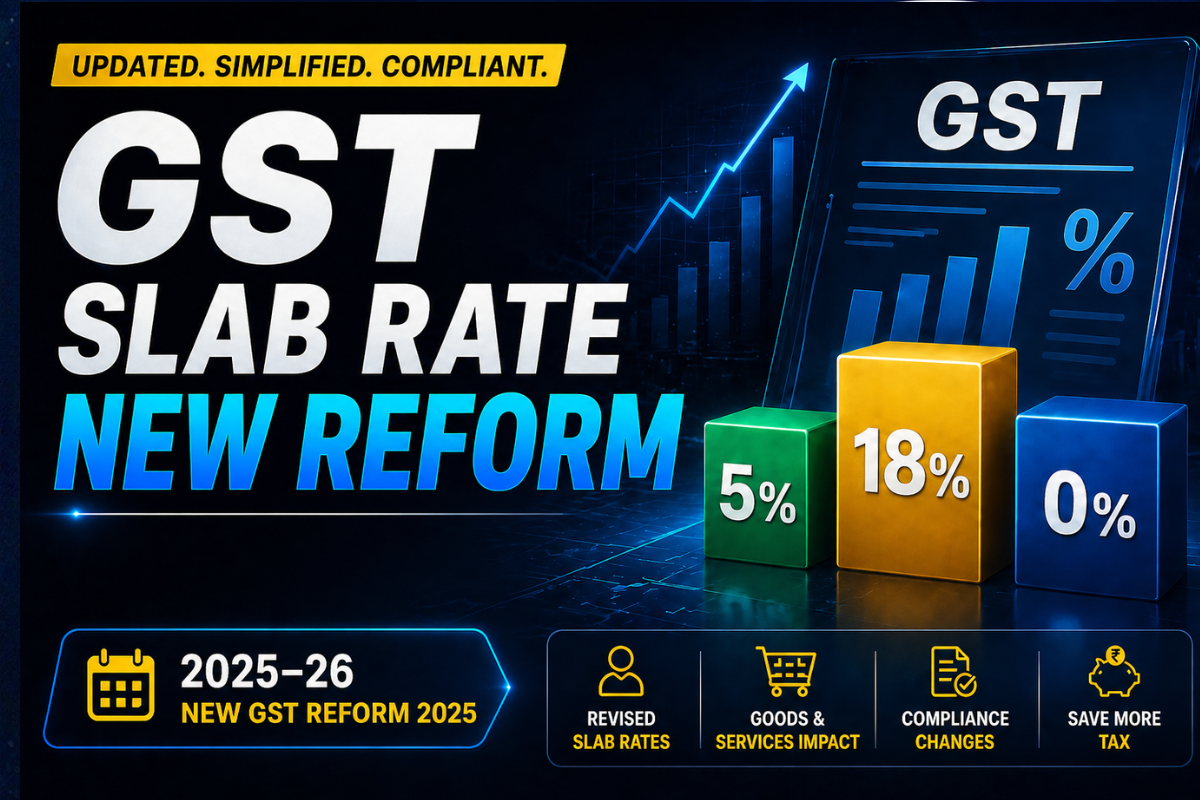
If someone told you in 2017 that India’s GST structure would one day be simplified to essentially three rates — 0%, 5%, and 18% — you would probably have been sceptical. Eight years of complex multi-slab taxation, endless classification disputes, and inverted duty structure headaches had become the GST system’s defining frustrations.
Then came September 2025. The 56th GST Council Meeting, chaired by Finance Minister Nirmala Sitharaman, delivered the most sweeping GST rate overhaul since the tax was introduced. Effective 22nd September 2025, the 12% slab was effectively abolished, the 28% slab was dramatically shrunk, and a new 40% slab was introduced for luxury and sin goods.
The result is what the government has called GST 2.0 — a cleaner, simpler, more rational rate structure that directly impacts what businesses charge, what consumers pay, and how compliance teams manage their billing systems. Here is the complete picture.
The Old Structure vs The New Structure
| Before September 2025 | After September 2025 (GST 2.0) |
Primary Slabs | 0%, 5%, 12%, 18%, 28% | 0%, 5%, 18%, 40% |
12% Slab | Active — many everyday goods | Effectively removed |
28% Slab | Wide — luxury + sin goods | Largely replaced by 40% slab |
New 40% Slab | Did not exist | Luxury & sin goods |
Special Rates | 3% (gold), 0.25% (diamonds) | Unchanged |
What Moved from 12% to 5% — Good News for Consumers
Food and Kitchen Essentials
- Ghee and butter — now 5% (was 12%)
- Packaged namkeen and bhujia — now 5% (was 12%)
- Tea and coffee (packaged) — now 5% (was 12%)
- Sauces, ketchup, and pasta — now 5% (was 12%)
- Fruit juices and soya milk — now 5% (was 12%)
Clothing and Footwear
- Footwear below Rs. 1,000 — now 5% (was 12%)
- Readymade garments priced between Rs. 1,000 and Rs. 10,000 — now 5% (was 12%)
Healthcare and Insurance — Big Wins
- 33 categories of lifesaving medicines — now 0% (fully exempt)
- Individual health insurance premiums (including family floater & senior citizen plans) — now 0% (was 18%)
- Term life insurance and ULIPs — now 0% (was 18%)
Agriculture and Infrastructure
- Tractors and harvesting machinery — now 5%
- Fertilizers including sulphuric acid and ammonia — now 5%
- Manmade fibre and yarn — now 5% (correcting inverted duty structure)
Hospitality and Wellness
- Hotel rooms with tariff up to Rs. 7,500 per day — now 5%
- Gyms, salons, barbers, and yoga centres — now 5%
What Moved from 18% to 5% — Everyday Relief
Beyond the 12% to 5% migration, several household items that were previously at 18% have also been brought down to 5%:
- Soaps — all varieties, now 5% (was 18%)
- Shampoos — now 5% (was 18%)
- Toothpaste — now 5% (was 18%)
- Hair oil — now 5% (was 18%)
- Chocolates — now 5% (was 18%)
- Instant noodles — now 5% (was 18%)
- Bicycles — now 5% (was 18%)
Also newly exempt (0%): Roti, paratha, chapati — now 0% (was 5%). UHT Milk and pre-packaged paneer — now 0%.
What Moved from 28% to 18% — Standard Rate Expansion
Consumer Durables
- Air conditioners — now 18% (was 28%)
- Dishwashers — now 18% (was 28%)
- All televisions including those above 32 inches — now 18% (was 28%)
- Kitchen appliances — now 18%
Automobiles
- Small cars — now 18% (was 28%)
- Motorcycles below 350cc — now 18% (was 28%)
- All automobile components and auto parts — uniform 18%
Construction
- Cement — now 18% (was 28%). A landmark change — 10-percentage-point reduction has meaningful downstream impact on construction costs and affordable housing.
The New 40% Slab — Luxury and Sin Goods
- Luxury cars above 1200cc petrol or 1500cc diesel engine
- Large SUVs and high-performance motorcycles above 350cc
- Aerated drinks, energy drinks, and carbonated beverages
- Online money gaming, betting, gambling, and horse racing
- Tobacco products — will shift to 40% once states’ GST compensation loan is fully repaid (no confirmed date yet)
Quick Rate Reference Table — Key Products
Product | Old Rate | New Rate | Direction |
Soaps | 18% | 5% | Reduced |
Shampoos | 18% | 5% | Reduced |
Toothpaste | 18% | 5% | Reduced |
Hair oil | 18% | 5% | Reduced |
Ghee & Butter | 12% | 5% | Reduced |
Namkeen & Bhujia | 12% | 5% | Reduced |
Chocolates | 18% | 5% | Reduced |
Instant Noodles | 18% | 5% | Reduced |
Footwear below Rs. 1,000 | 12% | 5% | Reduced |
Clothes Rs. 1,000 to Rs. 10,000 | 12% | 5% | Reduced |
Health Insurance (Individual) | 18% | 0% | Exempt |
Life Insurance (Term) | 18% | 0% | Exempt |
Lifesaving Medicines (33 drugs) | 12% | 0% | Exempt |
Air Conditioners | 28% | 18% | Reduced |
Televisions (all sizes) | 28% | 18% | Reduced |
Small Cars | 28% | 18% | Reduced |
Motorcycles below 350cc | 28% | 18% | Reduced |
Cement | 28% | 18% | Reduced |
Bikes above 350cc | 28% | 40% | Increased |
Aerated Drinks | 28%+cess | 40% | Increased |
Luxury Cars | 28%+cess | 40% | Increased |
What This Means for Your Business — Action Required Now
Update Your Billing Software Immediately
If you are still billing soaps, shampoos, or toothpaste at 18%, you are overcharging your customers. This creates a GST liability mismatch in GSTR-1 that your supplier has already corrected to 5% — leading to ITC disputes.
Review Your HSN Codes
Several reclassifications have happened at the HSN level. Items that moved from 28% to 18% — like ACs, TVs, and cars — need to be correctly coded in your system. Using the wrong HSN code will create overcharging issues or attract penalty for under-declaration.
Recalculate ITC Impact
If you purchase goods that have moved to lower slabs, your input tax credit on those purchases has also changed. Ensure your ITC reconciliation reflects the new rates from 22nd September 2025 onwards.
Anti-Profiteering Provisions Apply
When GST rates come down, the benefit must be passed on to consumers. The anti-profiteering provisions under GST law are active. Businesses that pocket the rate reduction rather than lowering prices can face action from the National Anti-Profiteering Authority.
The Verdict
GST 2.0 is the most meaningful reform to India’s indirect tax structure in eight years. For consumers, the reduction of everyday items like soaps, toothpaste, and insurance to 0% or 5% is genuine relief. For businesses, the simplification of slabs reduces classification disputes and makes compliance more predictable.
But simplification on paper still requires action on the ground. Billing systems need to be updated. HSN codes need to be verified. Returns need to reflect the correct rates from 22nd September 2025. The businesses that move fast and get their compliance right will benefit. Those that delay will find themselves with mismatched GSTR data, ITC problems, and potentially — notices.
Stay updated. Stay compliant.
Tax Advisory’s GST Practical Course covers the latest GST rate changes, return filing under the new regime, ITC computation, and portal-based training — all taught by practitioners who have been working with GST since Day 1 in 2017. Enroll now at courses.taxadvisory.in. |